Search Engine Optimization Basics – What is SEO?

Use SEO to get your webpages found on the web.Search Engine Optimization – sounds fairly simple right? Just optimize web pages for search engines. Done. It turns out that it’s a bit more complicated than that.

So, what is SEO? According to wikipedia, “Search engine optimization (SEO) is the process of affecting the visibility of a website or a web page in a search engine’s unpaid results – often referred to as “natural,” “organic,” or “earned” results.”

Basically, SEO can be thought of as making certain decisions and taking certain actions with the goal of increasing the odds that your webpages will be returned as close to the top of the search results as possible for certain queries.  In other words, making your webpages more relevant and important than your competitors.

Think of it like this: You put up a website. How do people find it among the nearly 1 billion websites now live? Unless a user types in your exact website URL, your webpages will be combined with all other webpages and ranked by the search engines. What can you do to make your pages more likely to be listed on the first page so that the right audience can find you? The answer is SEO.

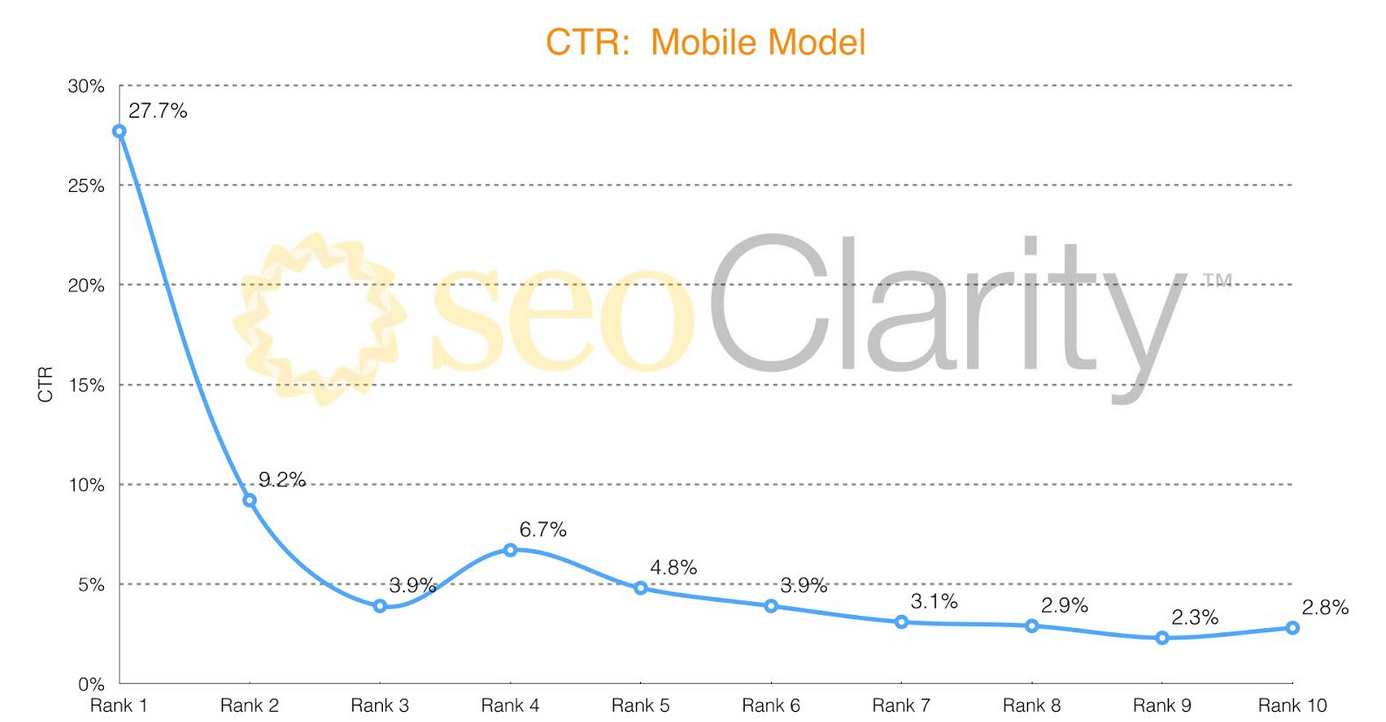
Why is this important? Statistics show that most searchers don’t go beyond the first page of results. Furthermore, according to this 2014 CTR Study from seoClarity, the top 3 positions receive approximately 19%, 11% and 8% click-through-rates, respectively. For mobile devices the numbers quite different, with the top 3 positions having CTR’s of approximately 28%, 9%, 4% respectively.
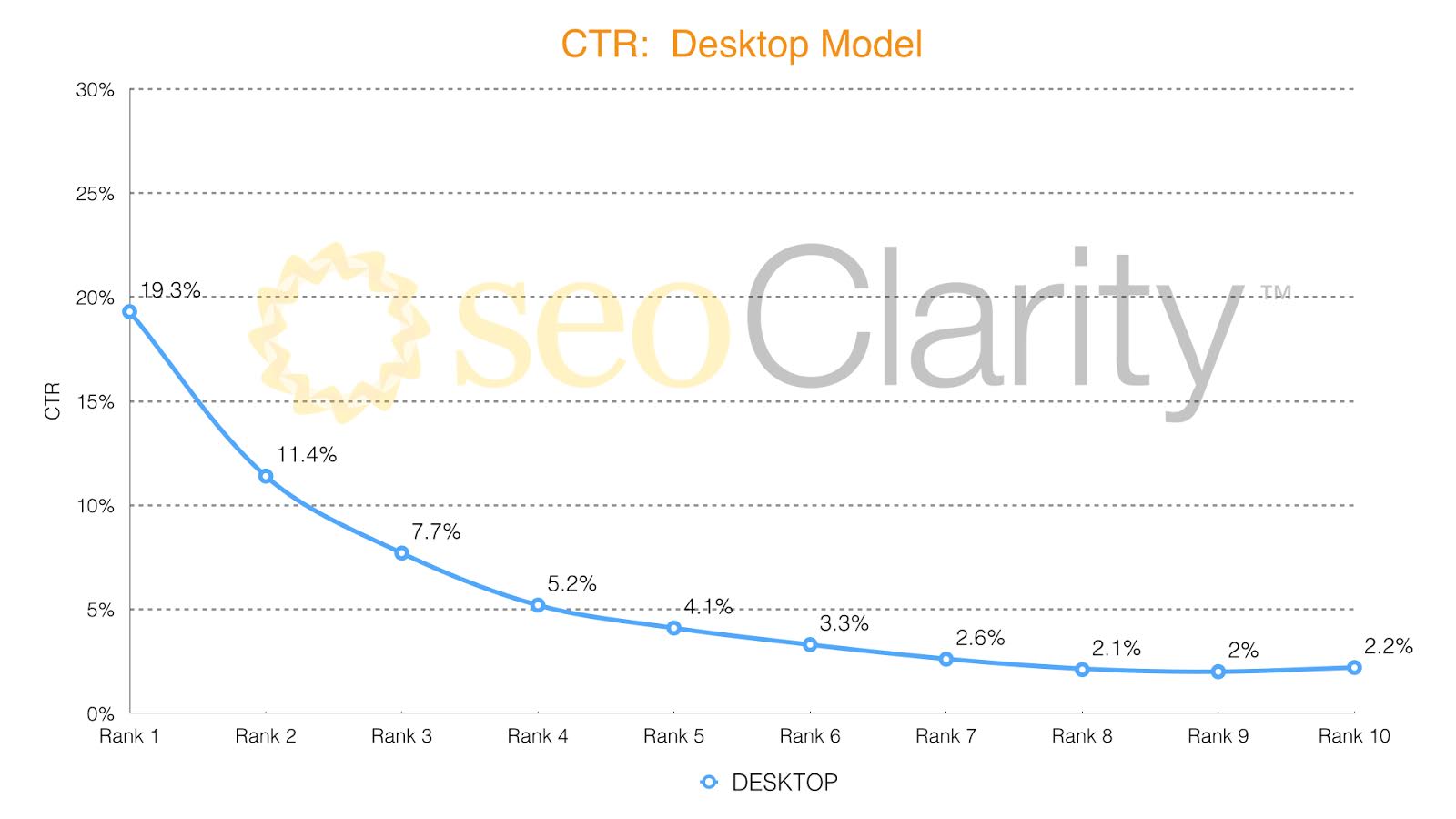
seoClarity Desktop SERP CTR graphic

seoClarity Mobile SERP CTR graphic


One key metric to use to help determine if you are getting the wrong audience is bounce-rate. Bounce-rate is a measure of how often a user lands on a page and has no more interaction with the page and leaves. Here’s a fictitious, simplified example: a user types the query ‘jaguar’ into a search engine and sees a link titled ‘mighty jaguars’ and clicks. The landing page is about the animal, but the user wanted information about the NFL team so they click the back button and leave the page. This would be a signal to the search engine that this webpage was not a relevant result for this query term. If this scenario happens enough times, this particular webpage will get pushed further and further down the results because it is drawing the wrong audience for this particular search term.

The bottom line is that the closer to the top of the search results you are, the higher your CTR will be. Of course none of that matters if your webpages are drawing the wrong audience.

Basic SEO Considerations

There are basically 2 general areas to consider when thinking about SEO on-page and off-page. On-page encompasses everything directly related to your pages – think page titles, h1 tags, domain name, URL structures, page speed, content, etc. Off-page refers to everything external to your site like backlinks, social mentions, article citations, social profiles, etc.

So, how should you go about optimizing your webpages? There are many outdated methods, as well as sub-optimal practices (known as black-hat) that I won’t go into. For the purposes of this basic overview I’ll list only legitimate (known as white-hat) methods:

On-page:

  • Ensure pages are mobile-friendly (see my previous post on why this is important)
  • Include keywords in Title tags and H1 tags
  • Ensure Title tags and H1 tags are different
  • Do not use Meta Keywords tag
  • Meta Description tag is optional, but I would suggest adding a well-written description tag
  • Ensure all images have alt tags
  • Ensure all images are optimized
  • Ensure pages are optimized for speed (compress images, configure server to compress pages)
  • Ensure content is not duplicated and has substance (avoid thin-content)
  • Ensure pages have good layout with clearly defined main content areas and good supplemental content(eg. navigation areas, search boxes, etc.)
  • Ensure your pages are returning the proper status codes (e.g. 200, 301, 404, etc.)

Off-page:

  • Establish backlinks from reputable sources
  • Establish a good backlink profile
  • Disavow backlinks from illegitimate sources
  • Optimize backlink anchor text where possible(ie. don’t use ‘click here for more info’ and try to incorporate keywords)
  • Optimize social profiles, especially Twitter
  • Optimize reputation where possible(especially yelp, yellowpages, etc.)
  • Ensure all name, address, phone numbers (NAP) are consistent across the web (e.g., make sure you don’t have different addresses listed in yelp and your website)

There are many, many more methods and strategies to implement depending on the goals of the company, the type of business, the level of competition, etc. The main thing to keep in mind is that SEO is an ongoing process and not a set-it-and-forget-it type of thing.
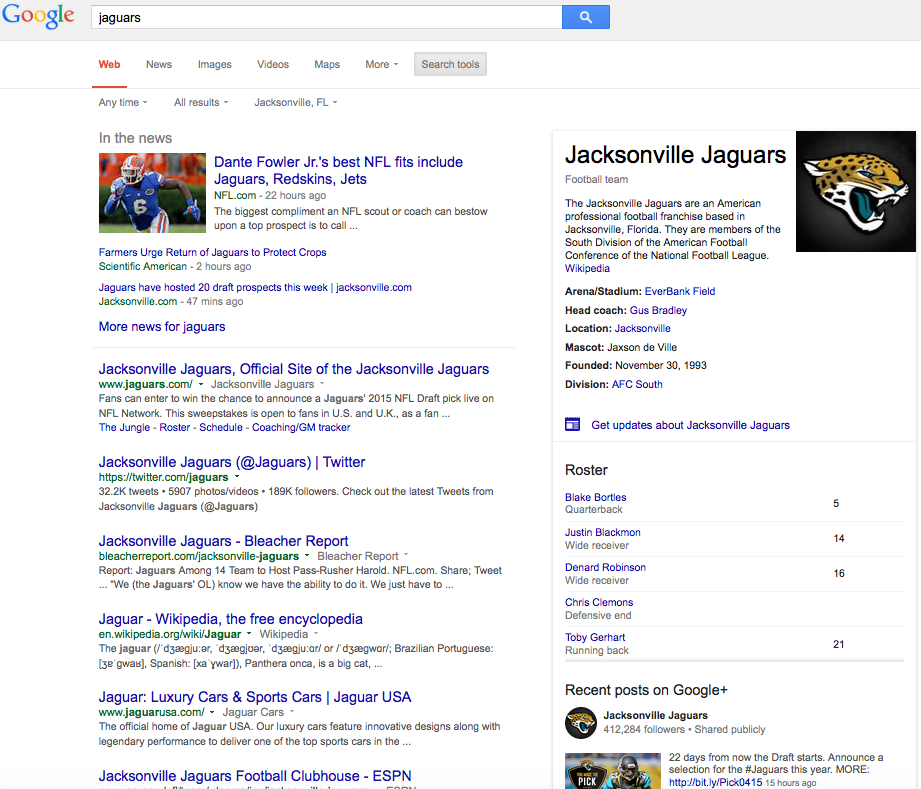
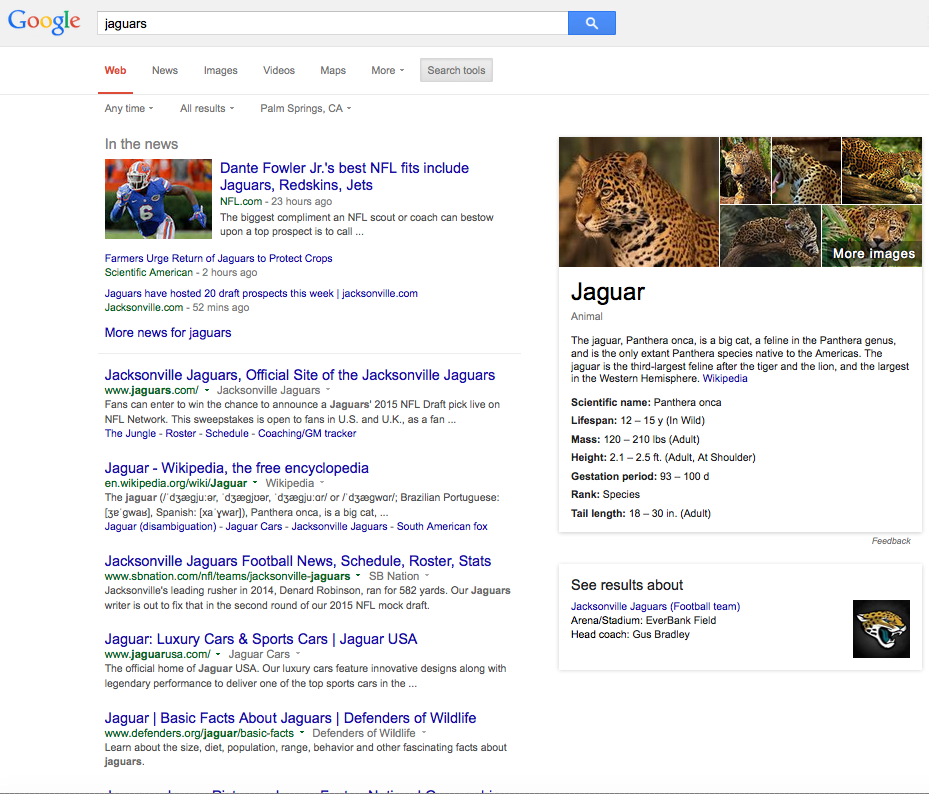
Why your SERP doesn’t look like my SERP.

Don’t be fooled by search engine result pages (SERP’s). You’ve checked your rankings and you see your pages consistently ranking high, but you’re not getting the traffic you expect. Or, maybe you have a client that insists their rankings are higher than what you are seeing. If these scenarios sound familiar, the two big factors to consider are device type, and personalization.

Search engines are increasingly tailoring results for mobile users (see my previous post: Googles-mobile-friendly-search-update-coming-april-21st). Mobile users are seen as “on-the-go” and seeking quick, easy to find answers. As such, mobile SERP’s will favor results that are mobile-friendly and don’t require a lot of scrolling on the page to find the information that a user is seeking. Additionally, location plays a key role for any queries deemed to have a local intent – explicit or implicit.

Personalization happens when search engines use factors such as your location and your search history to provide custom-tailored search results. Here is an example of where location settings can affect the results:

In this example I used the query “jaguars”. On the left is the SERP for the location “Jacksonville, FL” and on the right is the SERP for the location “Palm Springs, CA”.  It’s not surprising to see the Jacksonville Jaguars football team in the knowledge graph at the top right since Jacksonville is their home. As you can see, the SERP on the right returns results focused more on the animal, and not as much football related information:

(click to enlarge)

SERP for query “jaguars” with location set to “Jacksonville, FL”.
SERP-jaguars-palm springs
SERP for query “jaguars” with location set to “Palm Springs, CA”.


Search history comes into play through the use of cookies stored on your device, or if you are signed-in to Google (or Bing, etc.). The search engines will use your search history, and possibly your social connections (there is much debate about how much influence social media has on search rankings), to return content they think is more relevant to you based on what you’ve done in the past.

It’s becoming increasingly harder to completely eliminate these factors from your search results, but here are some things you can do (I’m referring to Google for these options, but you could apply them to Bing, Yahoo, etc.).

  • Sign out of your account.
  • Clear your browser cache/cookies
  • After running a search, choose “Search Tools”, then choose a location to use. This is good if you want to emulate a local user in another city. Also, you can choose “United States” for a general U.S.-based SERP.

Those are a few of the easier changes to make. For additional information, see Google’s tips for searching and browsing privately.

Google’s mobile-friendly search update coming April 21st.

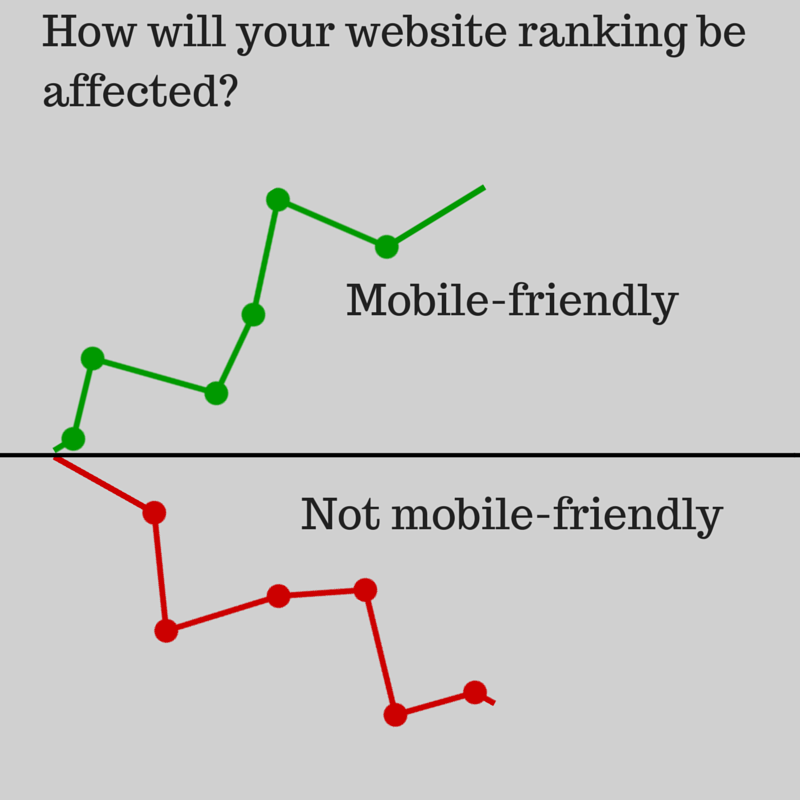
If your website is not mobile-friendly, Google may decrease your mobile search rankings.


Affect of Google's mobile-friendly search updateOn 4/21/2015, Google’s search algorithms will include mobile-friendliness as a ranking signal, which means that if your web pages are not easy to view and navigate on a mobile device, your rankings will take a hit. How drastic a hit is yet to be determined which is why many people are on edge. Google has stated that the implementation will roll out over several days, and each page will be either deemed mobile-friendly or not.

So, what should you do? If you get a lot of traffic from mobile users, you should definitely make your site mobile-friendly ASAP. If you don’t get much traffic from mobile users, then you can take your time in converting your site, but at some point you should probably make the conversion since mobile internet usage has overtaken desktop usage and is only going to continue to increase.

How to convert your site you ask? Well, there are a few options. The best option would be to make your site responsive. There are popular frameworks that can make this a bit easier – Twitter Bootstrap and Foundation are two that come to mind.  Or, you could create a separate version of your site designed specifically for mobile devices and place it on a subdomain (e.g. example.com for desktop, and m.example.com for mobile devices). Lastly, you could serve different versions of your site depending on the device. Google’s recommended method is to make your website responsive (see their mobile guide here: http://goo.gl/AKfJcP).

You can read Google’s official blog post here: http://goo.gl/AQmKgE

You can test whether or not Google sees your pages as mobile-friendly or not here: http://goo.gl/UqM2Oz

So, are you concerned about this change, or perhaps you’re already prepared and look forward to it?

Inaugural Post

Welcome to my blog. I’ll be sharing information I learn, my observations and my opinions as I study the field of SEO (Search Engine Optimization). My goal is to learn the best practices of SEO from top to bottom and to write about some topics as I go to help reinforce my understanding.

So far, I’ve been reading quite a bit of information online, following some well-known SEO people on Twitter, and taking courses at MarketMotive.com.

I’m finding there is a lot of information out there, both good and bad. Especially since the landscape is ever-changing, what was once considered good practice may no longer be practical or ethical. An example of this is the coming mobile algorithm update by Google, which I’ll write about in my next post.

Until then, thanks for visiting and I look forward to any comments/suggestions you may have.